Okay, let's be real. It's the conversation nobody wants to have, but everyone's thought about it at least once. Breaking up because of... well, let's just say, a certain lack of sparkle. Maybe it was the mysterious smells emanating from their side of the room, the perpetual mountain of clothes, or that one towel that seemed to defy all laws of cleanliness. Whatever the specific offense, poor hygiene can be a silent, yet potent, relationship killer.
Enter the "Hygiene Score," the latest viral trend sweeping social media. Here, people are hilariously (and sometimes brutally) rating their past relationships based on their ex's cleanliness, self-care routines, and basic adulting skills. It’s a mix of relatable cringe, comedic relief, and a stark reminder that sometimes, the simplest things can make or break a connection. While it's all in good fun (mostly), it taps into a deeper truth about how personal habits reflect respect, self-care, and overall compatibility.
For Gen Z, who are navigating relationships in an increasingly digital world, these trends offer a unique way to process past experiences, share relatable struggles, and even encourage self-reflection. It’s more than just a joke; it’s a collective acknowledgment that things like a clean living space or a consistent self-care routine are fundamental pillars of a healthy partnership. It's about understanding that personal presentation and the management of one's environment aren't just superficial; they're indicators of how someone values themselves and, by extension, their partner and shared life.
The "It's Complicated" Radar Chart
Does high "Adventure" make up for low "Hygiene"? Science says: No.
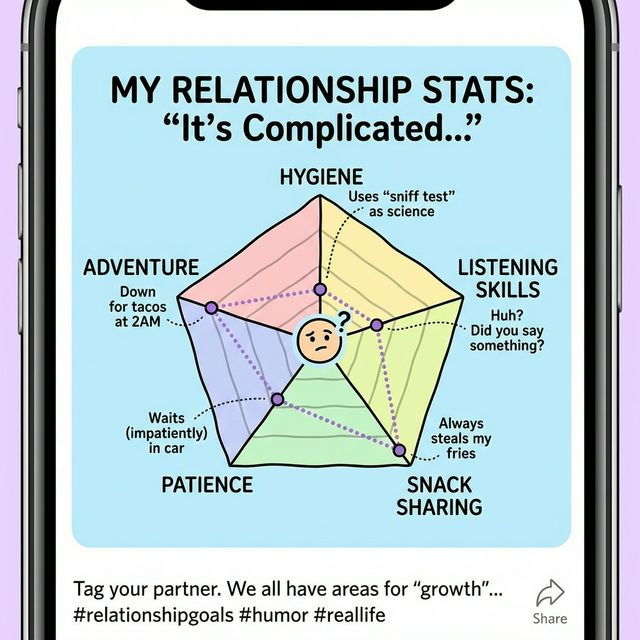
This radar chart, often seen in the wild, visually represents how different aspects of a relationship are perceived. While categories like "Adventure," "Humor," or "Intellect" might soar, a glaring dip in "Hygiene" can pull down the entire score. It highlights the uncomfortable truth that even the most exciting or intellectually stimulating partner can lose their luster if basic personal care is consistently lacking. It’s a stark visual reminder that foundational elements like hygiene are not optional extras; they’re integral to the overall health and appeal of a relationship.
Beyond the Basics: Why Hygiene Matters More Than You Think
Hygiene isn't just about smelling good or having a spotless apartment. It's a fundamental aspect of self-respect and, by extension, respect for your partner and the shared space you create. Neglecting personal care can signal a lack of attention to detail, a struggle with self-discipline, or even deeper issues like stress or mental health challenges. While empathy is crucial, the impact on a partner can be significant, leading to discomfort, resentment, and a breakdown of intimacy. It’s an unspoken contract in most relationships: we show up for each other, and that includes showing up as our best, well-cared-for selves.
Top 3 Hygiene Dealbreakers (According to the Internet)
While everyone's "ick" factor is different, some hygiene habits consistently pop up as major red flags in the "Hygiene Score" trend. These aren't just minor annoyances; they're often seen as indicators of a broader disregard for self-care or shared living. Let's dive into the most common culprits:
- The "All-in-One" Soap: Unless you are backpacking through the wilderness with only one bottle, you absolutely need separate products for your hair, face, and body. This isn't just about product specificity; it's about the effort and awareness of a basic self-care routine. Using a single, generic bar of soap for everything can signal a lack of personal investment in one's appearance and health. It suggests a "good enough" attitude that can translate into other areas of life, including the relationship. Showing you care enough to use the right products communicates that you value yourself and want to present your best self.
- The Sheet Situation: If your bedsheets are a mysterious shade of navy blue not because you chose the color, but because they haven't seen a washing machine in weeks (or months!), we know. Clean sheets are a non-negotiable for a comfortable, healthy living space. Unwashed sheets can harbor bacteria, dust mites, and odors, making the bed an uninviting place. This dealbreaker speaks volumes about managing a shared environment and basic household responsibilities. A clean bed isn't just about aesthetics; it's about creating a sanctuary, a place of rest and intimacy, that reflects care and consideration for both partners.
- Nail Care: Keep 'em clean, keep 'em short. It's not rocket science. Long, dirty, or unkempt fingernails and toenails are a common pet peeve. This might seem minor, but it's often perceived as a lack of attention to personal grooming and basic neatness. Whether it's during a meal, holding hands, or simply existing in close proximity, unkempt nails can be a significant turn-off. It’s a small detail that speaks to a larger picture of self-maintenance and signals a general awareness of one's body and how it interacts with the world (and your partner).
The Unspoken Language of Self-Care: Digital Wellness & Relationship Health
Beyond physical hygiene, the "Hygiene Score" trend subtly nudges us towards a broader understanding of "wellness hygiene." This includes mental and even digital hygiene. Just as a cluttered room can reflect a cluttered mind, neglecting digital wellness – like excessive screen time, doomscrolling, or poor online communication habits – can impact your mental state and, by extension, your relationships. Taking time for self-care, unplugging, and fostering healthy digital boundaries are all forms of modern hygiene that contribute to a balanced life and more present, engaged relationships.
This is where the idea of "gamifying healthy habits" comes in. For Gen Z, who grew up with gaming and progress bars, turning self-care into a series of "quests" can make it more engaging and less of a chore. Imagine daily "hygiene quests" like "Brush & Floss Boss," "Sheet Change Challenge," or "Digital Detox Dojo." By tracking progress and celebrating small wins, these essential habits become more satisfying and sustainable. It transforms routine tasks into achievable goals, fostering a sense of accomplishment and making self-improvement a fun, ongoing journey.
It's Not Just About Them, It's About You
While the "Hygiene Score" often focuses on exes, its true power lies in encouraging self-reflection. It's a chance to honestly evaluate your own habits. Are you consistently practicing good self-care? Do you maintain a tidy living space? Are your personal grooming habits on point? These aren't just about attracting a partner; they're about building a foundation of self-respect and well-being. When you prioritize your own hygiene, you're not only making yourself more appealing to others, but you're also fostering a sense of confidence and control that positively impacts every aspect of your life.
Ultimately, the "Hygiene Score" trend, while a bit cheeky, serves as a vital reminder: how we care for ourselves directly impacts how we show up in our relationships. It's a call to embrace holistic wellness – physical, mental, and digital – and to understand that these seemingly small habits form the bedrock of strong, respectful, and joyful connections. So, next time you're scrolling, consider your own Hygiene Score. It might just be the catalyst for a healthier, happier you and, consequently, healthier, happier relationships.
Don't Let Hygiene Be Your Downfall
BondQuests covers EVERYTHING in relationships — even the awkward stuff. Take the "Exit Interview" to see where you stand.
Take the Hygiene Quiz →